


Improve and enhance the pruning and de-stemming skills of winegrowers to reduce vine decline.
Understand and practice pruning that respects sap flow to maintain vineyard quality and reduce the impact of wood diseases. Know how to manage a team of pruners.
Training courses run in partnership with

University lecturers, INRAE researchers and industry professionals (Simonit&Sirch Maîtres Tailleurs de vigne).
Lecturers are specialists in their field of research and/or intervention.
Axis 1 :
Diagnose the physiological and sanitary functioning of a vineyard plot, in order to implement technical itineraries adapted to the plot's pedo-climatic context (pruning/trimming).
Axis 2 :
Set up a pruning operation by choosing the most appropriate pruning method for the vineyard and the vine's characteristics.
Axis 3:
Prune and maintain a vineyard plot in compliance with pruning rules, regulations and safety regulations.

Open to anyone over the age of 18
Application schedule for 2026/2027
- Server opens and application forms available for download: 4 May to 10 June 2026
- Application deadline: 11 June 2026
- Selection committee review of applications: 15 to 23 June 2026
- Final admission decision: 25 June 2026
Application schedule for the second session
- Server opens and application forms available for download: 1 September to 12 October 2026
- Deadline for receipt of applications: 14 October 2026
- Selection committee review of applications: 19 to 23 October 2026
- Final admission decision: 26 October 2026
Documents to be prepared
In addition to the application form you have downloaded and completed, you will need to provide :
- Highest level diploma and corresponding transcript
- A one-page curriculum vitae
- Proof of French language proficiency, DALF, DELF, TCF (for foreign students only)
Applications are made online via the Université de Bordeaux website, using the eCandidat application.
Selection is based on the candidate's professional or personal objectives and skills acquisition needs.
4 weeks of training, including 1 week of e-learning self-study and 3 weeks of classroom training
(1 week in November, 1 week in January and 1 week in May). 1/3 theory and 2/3 practical work carried out in the Bordeaux vineyards.
It is possible to follow the course in 3 separate blocks of skills:
Module 1 - Elementary level :
Why prune vines (Principles and methods)
Module 2 - Intermediate level :
How to prune the vine (Practical application)
Module 3 - Mastery level :
Vineyard management (Organizing work sites and supervising troops)
ISVV's continuing education department will help you deal with funding bodies.
Depending on your status, you may be eligible for funding from :
- OPCA : Fafsea, Vivea, Opcalim
- Contractual employment measures
- Individual financing
- Continuing education is aimed at employees, the self-employed, jobseekers and, more generally, anyone wishing to receive training, improve their skills or validate their professional experience.
- Depending on your status, there are a number of schemes that may enable you to benefit from financial aid
- The ISVV Continuing Education Department will guide you in your dealings with funding bodies and remains at your disposal for further information.
Find out more :
They put their trust in us...
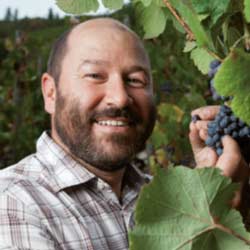
Dominique Roujou de Boubée
Director of "Terroir en Botella", Vigo Region, Spain
Has taken the D.U.T.E
Faced with the worrying progression of esca in many vineyards, the increase in vine degeneration and my desire to improve and be able to pass on the right techniques to my customers, I decided to enroll in the D.U.T.E. course as soon as I heard about it. Combining the theoretical knowledge of ISVV and INRA researchers with the practical experience of Simonit&Sirch's master cutters proved to be an extremely valuable learning experience. Now, I don't look at a vine the way I used to, and I don't think about pruning in the same way.